Robotic / Pinless Navigation
Joint Replacemnt
Introduction
Robotic / Pinless Navigation joint replacement is a minimally invasive surgical procedure where an orthopedic surgeon uses a robotic-assisted system to replace a damaged joint, most commonly the knee or hip. While the robotic arm assists with extreme precision, the surgeon remains in full control of the operation at all times.
Knee Joint
The knee is the largest joint in the body and having healthy knees is required to perform most everyday activities. The knee is made up of the lower end of the thighbone (femur), the upper end of the shinbone (tibia), and the kneecap (patella). The ends of these three bones where they touch are covered with articular cartilage, a smooth substance that protects the bones and enables them to move easily.
Details of Surgery
Knee replacement (also called knee arthroplasty) might be more accurately termed a knee “resurfacing” because only the surface of the bones are actually replaced. There are four basic steps to a knee replacement procedure.
Key Benefits over Traditional Surgery
- Precision & Accuracy: Sub-millimeter accuracy (often less than 0.5mm) ensures optimal implant alignment and positioning.
- Personalized Planning: Surgeons use 3D CT scans to create a virtual model of the patient’s unique anatomy before surgery, allowing for a customized surgical blueprint.
- Faster Recovery: Patients often experience less post-operative pain and smaller incisions, frequently beginning to walk within 24 hours of the procedure.
- Improved Longevity: Precise placement reduces abnormal wear and tear, potentially extending the lifespan of the artificial joint to 20 years or more.
- Tissue Preservation: The robotic arm is programmed to stay within specific boundaries, protecting healthy bone, ligaments, and soft tissue from accidental damage.
Common Applications
- Total Knee Replacement: For severe osteoarthritis affecting the entire joint.
- Partial Knee Replacement: For damage confined to a single compartment, preserving more of the natural joint.
- Total Hip Replacement: Reduces the risk of dislocation and ensures better leg length accuracy.
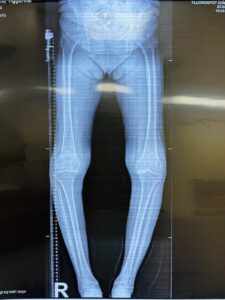
BEFORE SURGERY
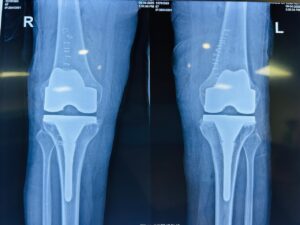
AFTER SURGERY WITH NAVIGATION – COMPLETE CORRECTION